


 United States ($) USD
 Austria (€) EUR
 Belgium (€) EUR
 Denmark (DKK) DKK
 Finland (€) EUR
 France (€) EUR
 Germany (€) EUR
 Ireland (€) EUR
 Japan (¥) JPY
 Luxembourg (€) EUR
 Netherlands (€) EUR
 Norway (NOK) NOK
 Sweden (SEK) SEK
 Switzerland (CHF) CHF
 United Kingdom (£) GBP

- Clone
- A18002D (See other available formats)
- Regulatory Status
- RUO
- Other Names
- Lsk, p56lck, LCK Proto-Oncogene, Src Family Tyrosine Kinase, Tyrosine-protein kinase LCK, Leukocyte C-terminal Src kinase, LSK, Lymphocyte cell-specific protein-tyrosine kinase, T cell-specific protein-tyrosine kinase
- Isotype
- Mouse IgG1, κ
- Ave. Rating
- Submit a Review
- Product Citations
- publications

-

Jurkat cells serum-starved overnight and then treated with 0.03% H2O2 for 5 minutes to activate Lck (positive cell line, filled histogram) or left untreated (negative cell line, open histogram) were fixed and permeabilized using Cyto-Fast™ Fix/Perm Buffer Set (Cat. No. 426803) and intracellularly stained with Alexa Fluor® 488 Lck Phospho (Tyr394) or Alexa Fluor® 488 Mouse IgG1, κ Isotype Control (open histogram, dashed line, representative histogram for both untreated and treated cells) (Cat. No. 400134). -

Jurkat cells were serum starved for 24 hours then treated for 5 minutes with 0.03% H2O2 to activate Lck (panel B) or left untreated (panel A). Cells were fixed with 4% PFA Fixation Buffer (Cat. No. 420801) for 10 minutes and permeabilized with 0.5% Triton X-100 for 10 minutes and blocked with 5% FBS for 1 hour at room temperature. Cells were then stained with Alexa Fluor® 488 Lck Phospho (Tyr394) (clone A18002D). Nuclei were counterstained with DAPI (Cat. No. 422801). The images were captured on a Revvity Operetta CLS™ High Content Analysis System with a 63X objective and merged. Scale bar: 50 µm
| Cat # | Size | Price | Save |
|---|---|---|---|
| 933107 | 25 µg | ¥35,200 | |
| 933108 | 100 µg | ¥79,200 |
The Src family tyrosine kinase p56Lck (Lck) is a non-receptor tyrosine kinase that plays a critical role in T cell selection and maturation within the thymus, and also in the function of mature T cells. Lck, which is constitutively bound to cytosolic domains of CD4 and CD8 surface receptors, plays an essential role in T cell receptor (TCR) signaling. Engagement of the TCR with peptide antigen-loaded MHC complexes results in the recruitment of CD4- and CD8-bound Lck to the TCR/CD3 signaling complex. Lck then transphosphorylates TCR-gamma chains and CD3 subunits, thereby activating the TCR/CD3 signaling pathway and leading to the recruitment and subsequent phosphorylation of Zap70 by Lck. Lck also plays an important role in interleukin-2 signaling that regulates the T cell proliferative response. Phosphorylation of Lck by CSK at tyrosine 505 negatively regulates the kinase, and is proposed to generate a closed, inactive conformation of the protein. Conversely, phosphorylation at tyrosine 394 in the activation loop of Lck greatly stimulates enzymatic activity. In many types of cancer, Lck is a proliferative and anti-apoptotic driver, and has been proposed as a target for therapeutic intervention.
Product DetailsProduct Details
- Verified Reactivity
- Human, Mouse
- Antibody Type
- Monoclonal
- Host Species
- Mouse
- Immunogen
- Synthetic peptide corresponding to human Src phosphorylated at tyrosine 419
- Formulation
- Phosphate-buffered solution, pH 7.2, containing 0.09% sodium azide
- Preparation
- The antibody was purified by affinity chromatography and conjugated with Alexa Fluor® 488 under optimal conditions.
- Concentration
- 0.5 mg/mL
- Storage & Handling
- The antibody solution should be stored undiluted between 2°C and 8°C, and protected from prolonged exposure to light. Do not freeze.
- Application
-
ICFC - Quality tested
ICC - Verified - Recommended Usage
-
Each lot of this antibody is quality control tested by intracellular immunofluorescent staining with flow cytometric analysis. For flow cytometric staining, the suggested use of this reagent is ≤ 0.5 µg per million cells in 100 µL volume. For immunocytochemistry, a concentration range of 1.0 - 10.0 μg/mL is recommended. It is recommended that the reagent be titrated for optimal performance for each application.
* Alexa Fluor® 488 has a maximum emission of 519 nm when it is excited at 488 nm.
Alexa Fluor® and Pacific Blue™ are trademarks of Life Technologies Corporation.
View full statement regarding label licenses - Excitation Laser
-
Blue Laser (488 nm)
- Application Notes
-
This clone may recognize other Src family members. This clone was developed using a synthetic peptide corresponding to human Src phosphorylated at tyrosine 419, which displays high sequence homology with the region surrounding Lck tyrosine 394. To confirm specificity to Lck Phospho (Tyr394), the cell line J.Cam1.6 was used. This cell line is a clonal derivative of Jurkat cells that harbors a truncated LCK allele with defective protein expression (Straus, et al. 1992. Cell. 70:585).
- Additional Product Notes
-
For use in immunocytochemistry (ICC), it is recommended to fix/permeabilize with either of the following:
-Fixation buffer (Cat. No. 420801) with 0.5 % Triton X-100
-Fixation buffer (Cat. No. 420801) with 100% ice-cold methanol
-100% ice-cold methanol only
Antigen Details
- Structure
- Lck is a 509 amino acid protein with a predicted molecular weight of 58 kD
- Distribution
-
Plasma-membrane associated/T cells
- Function
- Protein Tyrosine Kinase
- Interaction
- CD4, CD8, CD2, ZAP-70, LAT, CD45, CSK, SHP1, FYN
- Cell Type
- T cells
- Biology Area
- Cell Biology, Signal Transduction
- Molecular Family
- Protein Kinases/Phosphatase
- Antigen References
-
- Phillipsen L, et al. 2017. Sci Signal. 10:eaaf4736.
- Moogk D, et al. 2016. J Immunol. 197:644.
- Klammt C, et al. 2015. Nat Immunol. 16:961.
- Cancer Genome Atlas Network. 2015. Cell. 161:1681.
- Casas J, et al. 2014. Nat Commun. 5:5624
- McNeill L, et al. 2007. Immunnity. 27:425.
- Lefebvre DC, et al. 2003. Biochim Biophys Acta. 1650:40.
- Kabouridis PS. et al. 2003. Biochem J. 371:907.
- Abraham N, et al. 1990. Mol. Cell. Biol. 10:5197.
- Gene ID
- 3932 View all products for this Gene ID
- UniProt
- View information about Lck Phospho Tyr394 on UniProt.org
Related Pages & Pathways
Pathways


Related FAQs
Other Formats
View All Lck Phospho (Tyr394) Reagents Request Custom Conjugation| Description | Clone | Applications |
|---|---|---|
| Purified anti-Lck Phospho (Tyr394) | A18002D | WB,ICC,ICFC |
| PE anti-Lck Phospho (Tyr394) | A18002D | ICFC |
| Alexa Fluor® 647 anti-Lck Phospho (Tyr394) | A18002D | ICFC,ICC |
| Alexa Fluor® 488 anti-Lck Phospho (Tyr394) | A18002D | ICFC,ICC |
Compare Data Across All Formats
This data display is provided for general comparisons between formats.
Your actual data may vary due to variations in samples, target cells, instruments and their settings, staining conditions, and other factors.
If you need assistance with selecting the best format contact our expert technical support team.
-
Purified anti-Lck Phospho (Tyr394)
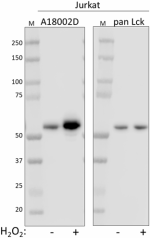
Whole cell extracts (15 µg protein) from serum starved Jurka... 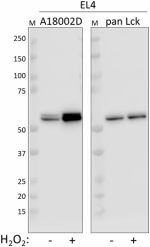
Whole cell extracts (15 µg protein) from serum starved EL4 c... 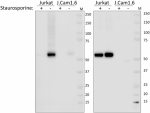
Whole cell extracts (15 µg protein) from Jurkat and J.Cam1.6... 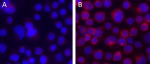
Jurkat cells untreated (panel A) or treated (panel B) with 5... 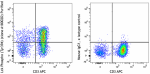
Human peripheral blood lymphocytes were treated with (left),... -
PE anti-Lck Phospho (Tyr394)
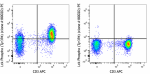
Human peripheral blood lymphocytes were treated with (left),... -
Alexa Fluor® 647 anti-Lck Phospho (Tyr394)

Jurkat cells serum-starved overnight and then treated with 0... 
Jurkat cells were serum starved for 24 hours then treated fo... -
Alexa Fluor® 488 anti-Lck Phospho (Tyr394)

Jurkat cells serum-starved overnight and then treated with 0... 
Jurkat cells were serum starved for 24 hours then treated fo...


Follow Us